Let’s start with the obvious. A tomato tastes like a tomato. A locally-grown one during the summer will, of course, have bigger, better, more multi-dimensional tomato flavor than a faraway-grown one in the dead of winter. But they will all taste like tomatoes.
It also probably won’t surprise you that different tomato varieties have different flavors. Just like different apple varieties, or varieties of pears or peppers.
But did you know that you can tell a lot about the flavor of any tomato just by looking at it?
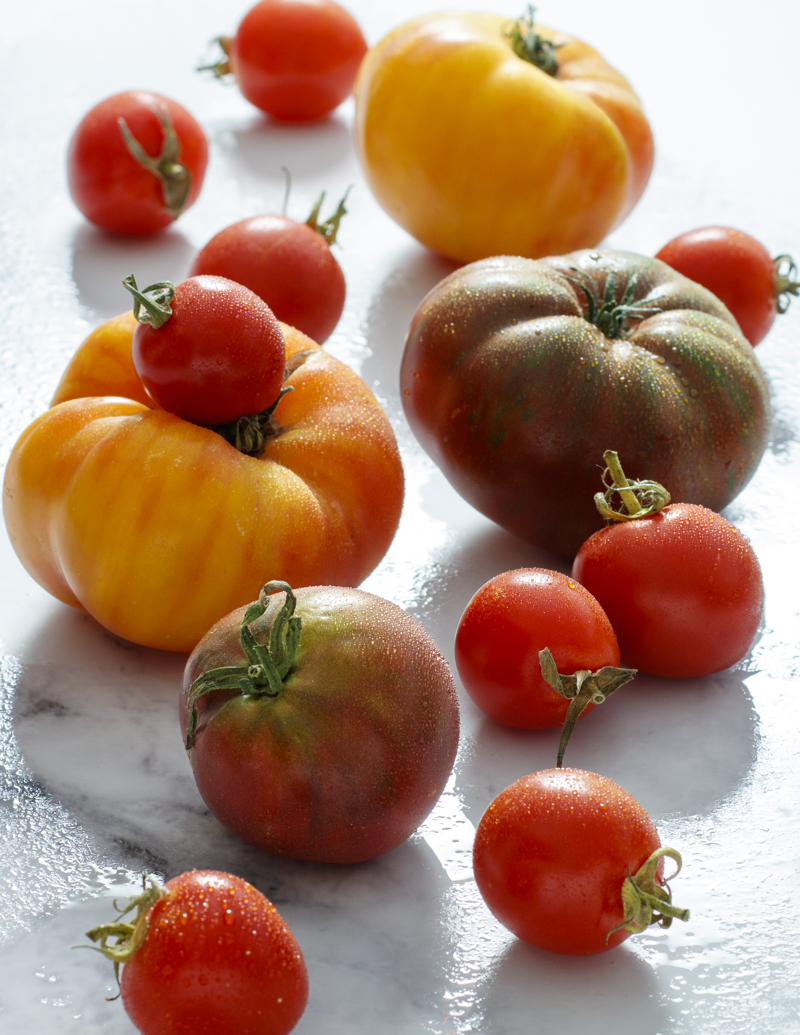
How? Go by the color.
Take red, for example. Being the classic tomato color red tomato varieties of course have a classic tomato flavor, with a nice balance between sweetness and acidity.
Lighter colored varieties like yellow and orange, however, will have less acidity giving them a sweeter flavor. Not unlike how white peaches or nectarines tend to be sweeter and less acidic than their yellow counterparts.
Green-when-ripe tomatoes tend to have more acidicy, making them taste a little less sweet and a little more tart.
(By “green-when-ripe” I mean green zebras and other varieties that maintain their green color even when ripe. As opposed to unripe green tomatoes, like the ones used for fried green tomatoes or my grandma’s Pickled Green Tomatoes, which are actually other-colored tomatoes picked before ripening.)
And purple, burgundy, or “black” tomatoes are kind of like red ones but with more oomph. A grower once told me she thought they tasted salty, which I attribute to that their flavor is bigger, richer, and more complex—like a red tomato that’s been salted. Some will also tell you they’re smoky.
Does all that mean you should use different colors for different recipes? Maybe.
Sweeter yellow and orange tomatoes might be best for a tomato salad that also has sweet ingredients like fruit. This Tomato and Peach Salad with Feta and White Balsamic, for example. They’re also great for adding sweetness to salsas and gazpacho.
Tangier green-when-ripe tomatoes might be best for places where you want a little zing. A mayo-y sandwich, for example, or tomatillo salsa. Or pair them with yellow tomatoes, for a balance between sweetness and acidity.
Red tomatoes are, of course, best wherever you want a classic tomato flavor—tomato sauce, tomato soup, caprese salad, panzanella.
Purple, burgundy, and black tomatoes are best for places that would benefit by their complexity and richness. So pretty much wherever you want a red tomato taste, but more so.
Me, although I lean towards the purples, I tend to buy a little of everything. Because I love the look of all the colors in my salad or my Tons of Tomatoes Fettuccine (pictured).
But most importantly, the best tomato is always whatever looks and feels best in the moment. So even though you might prefer, say, red or yellow, if they’re rocks, or overripe, or in any other way less than spectacular, pick a different color.
Summer-licious ways to enjoy tomatoes:
Simply Good Summer Tomato Salsa
Latin-Inspired Caprese Salad
Summer Farro Salad
Heirloom Tomato, Bacon, and Fresh Mozzarella Sandwiches
Tons of Tomatoes Fettuccine (pictured)
Cornmeal-Crusted Petrale with Tomato-Tarragon Relish
Pan-Seared Rosemary Rainbow Trout with Cherry Tomato Relish
Grilled Pork Chops with Cherry Tomatoes, Goat Cheese, and Arugula

PakarPBN
A Private Blog Network (PBN) is a collection of websites that are controlled by a single individual or organization and used primarily to build backlinks to a “money site” in order to influence its ranking in search engines such as Google. The core idea behind a PBN is based on the importance of backlinks in Google’s ranking algorithm. Since Google views backlinks as signals of authority and trust, some website owners attempt to artificially create these signals through a controlled network of sites.
In a typical PBN setup, the owner acquires expired or aged domains that already have existing authority, backlinks, and history. These domains are rebuilt with new content and hosted separately, often using different IP addresses, hosting providers, themes, and ownership details to make them appear unrelated. Within the content published on these sites, links are strategically placed that point to the main website the owner wants to rank higher. By doing this, the owner attempts to pass link equity (also known as “link juice”) from the PBN sites to the target website.
The purpose of a PBN is to give the impression that the target website is naturally earning links from multiple independent sources. If done effectively, this can temporarily improve keyword rankings, increase organic visibility, and drive more traffic from search results.

