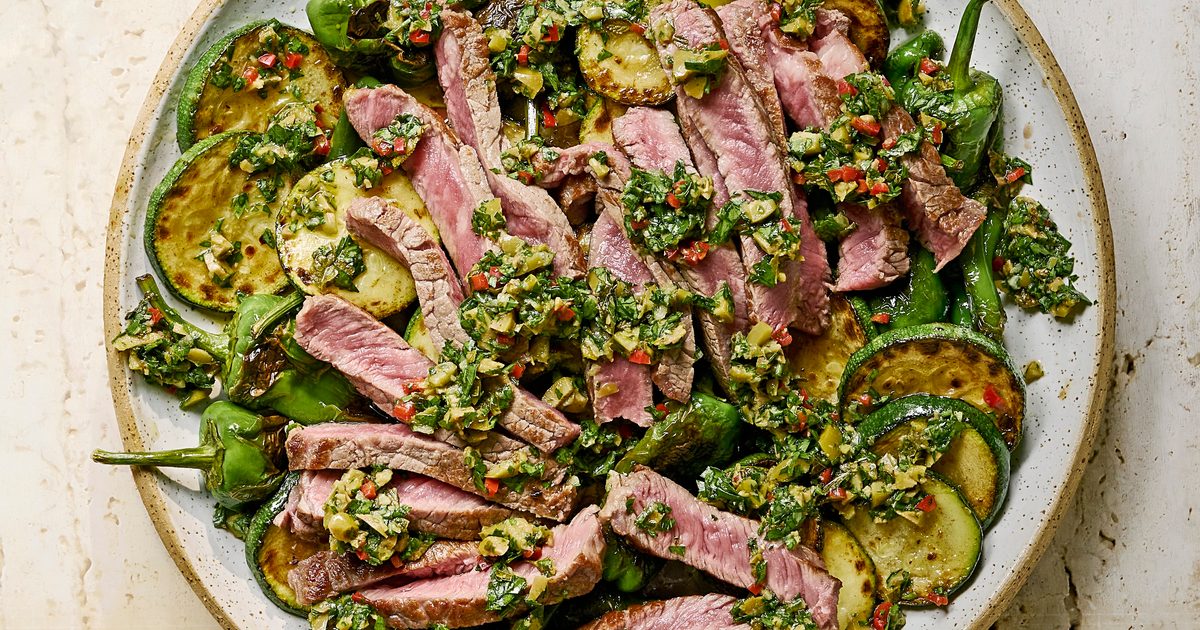
Who says low-calorie can’t be tasty? We’ve chosen five dinners, each designed to serve two, to show you just how varied and flavoursome diet dishes can be. They’re all ready in under 40 minutes (most in just 20-30), making them perfect for busy weeknights.
With salmon (or feel free to substitute more sustainable trout), steak and prawns in this weekday menu, you won’t feel short-changed. There’s a hit of spice in our harissa baked aubergines, plus a base of mixed grains that will keep you feeling full. Pasta and tacos keep the comfort food favourites coming, while an olive chimichurri steak is an absolute treat that you can still enjoy while eating low-cal.
Recommended calorie intakes are 2,000 kcal per day for women and 2,500 kcal for men aged 18-75. For healthy, gradual weight loss, reducing your calorie intake by 500-600 kcal a day (or doing additional exercise to burn off the equivalent calories) is recommended. Note that these are average amounts and that we all vary as individuals.
Pair these low-calorie dinners with a sensible breakfast and lunch (aim to include protein and wholegrains to keep you feeling full) and you shouldn’t find it hard to stay within your calorie target.
To keep things simple, use the in-app shopping list to add ingredients from each recipe, then check the My Good Food tab for one clear, organised list before you shop.
PakarPBN
A Private Blog Network (PBN) is a collection of websites that are controlled by a single individual or organization and used primarily to build backlinks to a “money site” in order to influence its ranking in search engines such as Google. The core idea behind a PBN is based on the importance of backlinks in Google’s ranking algorithm. Since Google views backlinks as signals of authority and trust, some website owners attempt to artificially create these signals through a controlled network of sites.
In a typical PBN setup, the owner acquires expired or aged domains that already have existing authority, backlinks, and history. These domains are rebuilt with new content and hosted separately, often using different IP addresses, hosting providers, themes, and ownership details to make them appear unrelated. Within the content published on these sites, links are strategically placed that point to the main website the owner wants to rank higher. By doing this, the owner attempts to pass link equity (also known as “link juice”) from the PBN sites to the target website.
The purpose of a PBN is to give the impression that the target website is naturally earning links from multiple independent sources. If done effectively, this can temporarily improve keyword rankings, increase organic visibility, and drive more traffic from search results.